

Timber, PVC and aluminium plantation shutters all do the same job well, so the right choice usually comes down to which room they’re going in. Timber suits living areas and bedrooms, PVC handles bathrooms, laundries and kitchens without fuss, and aluminium is the one for coastal homes, wide openings and rooms that take real heat and sun. Below we compare all three on look, moisture, durability, maintenance and cost, then work through which material suits which room in your home.
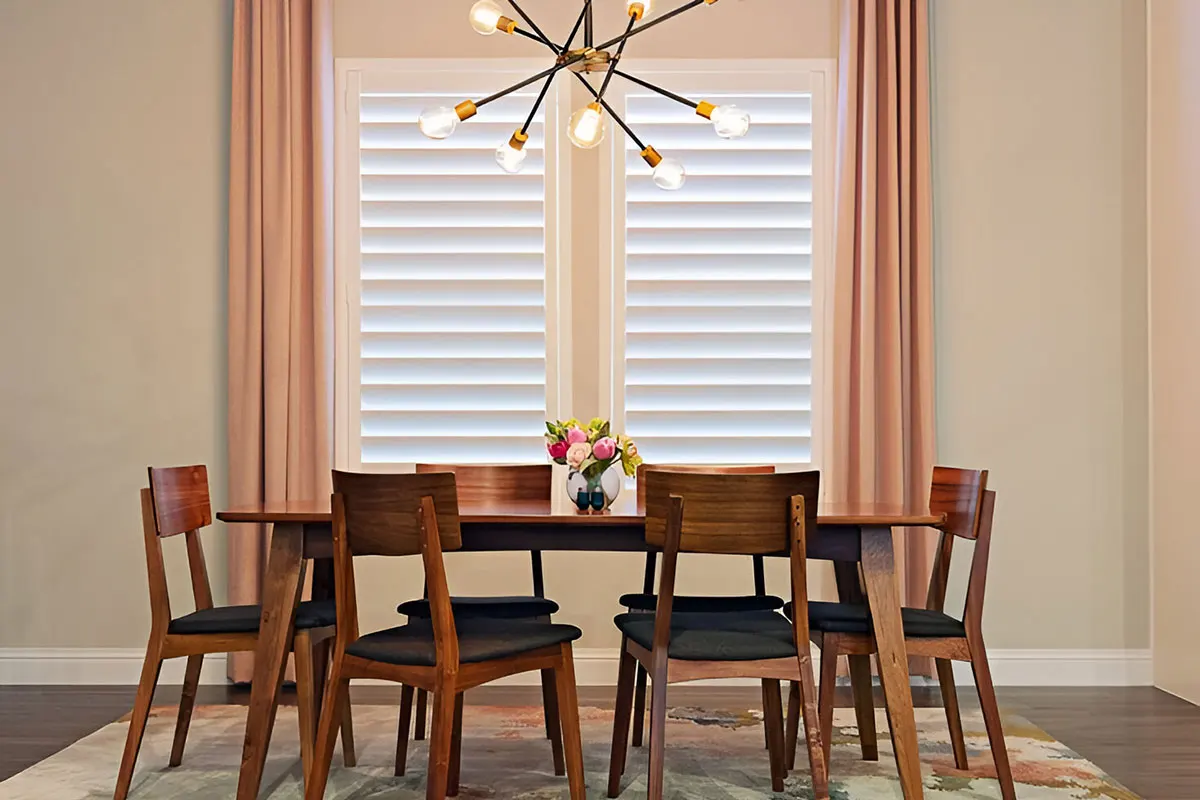
At a Glance: Timber, PVC and Aluminium Plantation Shutters
Once a customer has settled on plantation shutters, the next question is almost always which material to go with. It’s a fair question, because all three look similar on a showroom display and the differences only really show up once they’re installed and living in a room. Here’s the short version.
|
|
Timber
|
PVC
|
Aluminium
|
|---|---|---|---|
|
Look and feel
|
Natural grain, warmest finish
|
Clean painted finish
|
Contemporary, powder-coated
|
|
Moisture and humidity
|
Least suited to wet rooms
|
Waterproof, built for wet rooms
|
Waterproof, resists salt air
|
|
Best rooms
|
Living, dining, bedrooms
|
Bathrooms, laundries, kitchens
|
Coastal homes, wide openings, sun-facing rooms
|
|
Durability
|
Long-lasting in dry rooms
|
Resists warping and swelling
|
Strongest of the three, resists corrosion
|
|
Maintenance
|
Dusting, occasional care
|
Wipe clean
|
Wipe clean
|
|
Colour and finish
|
Paint or stain options
|
Painted finishes
|
Powder-coated finishes
|
|
Relative cost
|
Higher
|
Cost-effective
|
Mid to higher
|
Plantation shutters are fitted inside your home, within the window reveal or on the frame. If you’re after something for a patio, deck or alfresco area, outdoor shutters are the range to look at.
What Are Plantation Shutters?
Plantation shutters are a made-to-measure window covering built from a frame and a panel of adjustable horizontal louvres. You tilt the louvres to control light and privacy, and swing the panels open when you want the window clear. Because each set is measured and built for its specific opening, they sit flush against the window in a way a blind or curtain can’t. For the full introduction to the category, read our full guide to plantation shutters.
Timber Plantation Shutters
Timber plantation shutters are the traditional choice, and the one most people picture when they imagine the style. Real timber carries a grain and a depth that painted and powder-coated finishes get close to but don’t quite replicate. It also takes both paint and stain, so it can be matched to existing joinery, skirting boards or floors.
Where timber earns its place:
- Living and dining rooms, where the plantation shutters are part of the room’s finish rather than just a window covering.
- Bedrooms, where warmth matters and moisture isn’t a factor.
- Period homes, where painted timber sits naturally against original detailing.
- Rooms you want to colour-match, since the stain and paint options are broader than the other two materials.
Watch out for: timber and sustained moisture don’t mix. In a bathroom or laundry, repeated humidity can lift a finish or move a panel over time, which is why we steer customers to PVC or aluminium in those rooms. Timber is also the higher-cost option of the three in most configurations.

PVC Plantation Shutters
PVC plantation shutters are built for the rooms timber struggles in. PVC is waterproof, so it won’t swell, warp or lift the way a timber panel can in a humid room, and it wipes clean with a damp cloth.
In our showrooms, PVC is the material consultants recommend most often as soon as a customer mentions a bathroom, an ensuite or a laundry. It’s also a common pick for kitchens, where steam and cooking residue are a daily reality rather than the occasional splash.
Where PVC earns its place:
- Bathrooms and ensuites, where humidity is constant and finishes take a beating.
- Laundries, for the same reasons, with the added benefit of easy cleaning.
- Kitchens, where you’ll want to wipe the louvres down more often than you’d think.
- High-traffic and rental homes, where low maintenance matters more than a specific finish.

Watch out for: the finish palette is narrower than timber. PVC comes in painted finishes rather than stains, so if you’re matching to a stained floor or dark joinery, timber gives you more room to move. Larger PVC panels also carry more weight than their timber equivalents, which can mean more panels across a wide opening.
Aluminium Plantation Shutters
Aluminium plantation shutters are the ones we point coastal homeowners to. Salt-laden air is hard on finishes and fixings, and aluminium with a powder-coated finish is built to stand up to it. If you live near the water, that’s the clearest reason to choose aluminium over PVC when either would otherwise do the job.
Aluminium is also the strongest of the three. It’s light for its strength, so a panel can span a wider opening before it needs an extra division, and the powder-coated finish bonds colour to the metal rather than sitting on top of it. Like PVC, it’s waterproof.
Where aluminium earns its place:
- Coastal and salt-air homes, where corrosion resistance matters as much as moisture resistance.
- Wide or full-height openings, where strength across the span is the deciding factor.
- Rooms with hard afternoon sun, where heat and UV are daily rather than seasonal.
- Wet rooms with a contemporary finish, for anyone who wants something cleaner-lined than PVC.
Worth knowing: aluminium plantation shutters are still an internal fitting. They’re built to handle heat, sun and salt air from the inside of the window, not to be mounted on the outside of the house. For a patio, deck or alfresco area, outdoor shutters are the product you want.
Watch out for: the look reads as more contemporary and more functional than timber. In a formal living room or a period home, most customers still land on timber.
How the Three Compare: Cost, Durability and Maintenance
The material decision usually comes down to these three, once the room has narrowed the field.
Cost
Timber sits at the higher end, PVC is the most cost-effective of the three, and aluminium generally lands between them, moving higher on wide or complex openings. Configuration matters more than material alone: opening size, panel count, frame style and mounting all move the number. Plantation shutters are made to measure, so a real figure only comes from a measure.
Durability
All three last well in the room they’re suited to, which is the point worth holding onto. Timber is long-lived in a dry room and can be refinished if it’s ever damaged. PVC won’t degrade in humidity and holds its shape in rooms that would move a timber panel. Aluminium is the most physically robust, resists corrosion in coastal air, and is the best answer where a panel is large enough that rigidity becomes the issue.
Maintenance
PVC and aluminium both wipe clean with a damp cloth, which is most of their appeal in a bathroom or kitchen. Timber wants dusting and the occasional gentle clean, and should be kept out of standing moisture. None of the three is demanding.
One more choice sits across all three: louvre width. It changes the look more than most people expect, with narrower louvres reading as more traditional and wider ones giving a cleaner sightline and more view when open. Your local Solomons showroom can show you what’s available in each material.
Which Plantation Shutters Suit Which Room?
The plantation shutters range covers all three materials, so there’s no need to commit to one across the whole house. Here’s where each one tends to land.
- Living and dining rooms. Timber, almost always. This is where the material is doing visual work as well as practical work. If you’re layering with fabric, our guide to sheer and blockout curtains covers how the two work together.
- Bedrooms. Timber for warmth and finish. Plantation shutters close down tightly for privacy, though a fully dark room needs a blockout layer behind them.
- Bathrooms and ensuites. PVC. Constant humidity is exactly what it’s built for.
- Laundries. PVC, for the same reasons, and because it cleans easily.
- Kitchens. PVC in most homes. Aluminium if the window sits over a cooktop or takes strong sun.
- Wide and full-height openings. Aluminium, where the span is doing the deciding.
- Coastal homes. Aluminium anywhere salt air reaches, which in a home near the water is most of it. Keep timber for the driest, most sheltered rooms.
- Humid homes. PVC or aluminium throughout. This comes up constantly in our Brisbane stores, where year-round humidity makes the material choice more consequential than it is further south.
If you’ve worked out which material suits which room and want real numbers against your own windows, book a free measure and we’ll come to you.
Final Thoughts
There’s no single winner here, and most homes don’t end up with one. Timber in the living areas, PVC in the bathroom and laundry, aluminium where an opening is wide or the sea air gets in: that’s a normal, sensible outcome rather than a compromise. Choose per room and you’ll get more out of all three.
The materials are much easier to judge in person than on a screen, so if you’re weighing them up, find your local Solomons store and put your hands on them. Or book a free measure and we’ll bring the options to your windows.
Frequently Asked Questions
Yes. PVC doesn't absorb water, so it won't swell, warp or lift the way timber can in a humid room, which is why it's the material we recommend for bathrooms, ensuites and laundries. Aluminium is waterproof too, and is the better pick in a coastal home where salt air is a factor. Timber is the one to keep out of wet rooms.
Cost depends on the material, the size of the opening, the number of panels and the frame and mounting style, so there's no single figure. Timber generally sits at the higher end and PVC is the most cost-effective. Because every set is made to measure, a free measure is the only way to get a real number for your windows.
Timber can be repainted or restained, which is part of its appeal in a home you plan to hold onto. PVC and aluminium come with their finishes applied at manufacture and aren't designed to be refinished at home. If changing colour down the track matters to you, that's an argument for timber.
No. Plantation shutters are an internal fitting, mounted inside the window reveal or on the frame, even when the window faces the street. For a patio, deck or alfresco area you want outdoor shutters, which are built and mounted for exposure to the weather.
They do help. The panel sits close to the glass and adds a layer between the window and the room, which slows heat transfer in both directions. Closing the louvres against summer afternoon sun makes a noticeable difference in west-facing rooms.
Yes, and it's common. Matching the frame profile and colour across the home keeps things looking deliberate while letting each room have the material that suits it. Our consultants can help you plan the mix so the finishes read as one decision rather than several.


